Rules
Cricket darts rules: how to play and keep score
How to play cricket on a dartboard: the numbers used, marks and closing, scoring points, how the bull counts, keeping score and the cut-throat version.
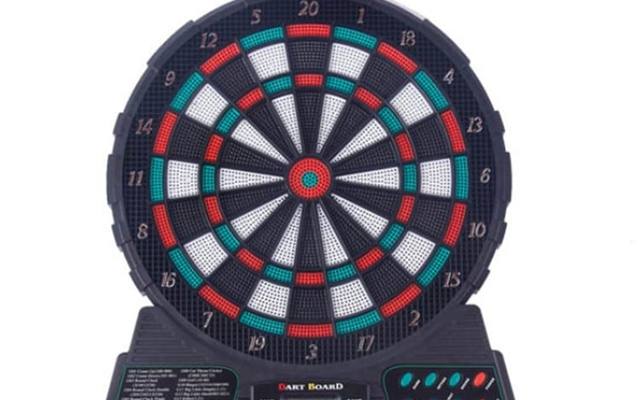
Cricket is a darts game for two players or two teams that is quick to learn, needs no long sums and rewards accuracy on a handful of numbers. It is also a good way to practise trebles. This guide explains the rules, how to keep score on a whiteboard and the common variations, so everyone at the board plays the same game.
Cricket or tactics?
A note on the name before the rules. In the UK, cricket has also been the name of an older pub game modelled on the bat-and-ball sport, with a batting side scoring runs and a bowling side aiming at the bull to take wickets. Darts historian Patrick Chaplin points out that the game known as cricket in the US is known in the UK as tactics.
This guide covers that game, played on 15 to 20 and the bull. It is the version described in soft-tip league rules and in darts retailers' guides. If someone at your club suggests a game of tactics, it is very likely the same thing. If they talk about batting and bowling, they mean the old pub game.
The aim of the game
Each player (or team) tries to close the numbers 15 to 20 and the bull before the other side does, while scoring more points. You close a number by hitting it three times. Once you have closed a number, any further hits on it score points for you, until your opponent closes it too.
You win when you have closed all seven targets and your points total is the same as or higher than your opponent's.
What you need
- A dartboard at the standard height: 1.73 m from the floor to the centre of the bull.
- A throw line: 2.37 m from the face of a bristle board. Many soft-tip boards use about 2.44 m, so check the manual of an electronic board.
- Three darts per player. Steel-tip darts on a bristle board, soft-tip darts on an electronic board.
- A whiteboard or chalkboard, or the cricket mode on an electronic board.
Our guide to dartboard height and oche distance explains how to measure both.
The numbers in play
Only seven targets count: 20, 19, 18, 17, 16, 15 and the bull. Darts that land anywhere else, including 1 to 14, score nothing. Each player throws three darts per turn, as in 501.
Marks: how to close a number
Every hit on a cricket number gives you marks on that number:
| Where the dart lands | Marks |
|---|---|
| Single | 1 |
| Double ring | 2 |
| Treble ring | 3 |
| Outer bull (green) | 1 on the bull |
| Bullseye (red) | 2 on the bull |
Three marks close a number. A treble closes it in one dart, a double and a single in two, three singles in three. There is no treble on the bull, so you close it with a bullseye and an outer bull, or three outer bulls, or two bullseyes (the extra mark scores if you are allowed to score there).
You can close the numbers in any order. Most players start at 20, because that is where the points are, and work down.
Scoring points
Once you have closed a number, extra marks on it score its value, as long as your opponent has not closed it:
- Each extra single on 20 scores 20, a double 40 and a treble 60.
- Points on the bull count 25 for the outer bull and 50 for the bullseye.
- When both sides have closed a number, it is dead. Hits on it score nothing for anyone.
Points matter because they decide the winner. A player who closes everything first but is behind on points has not won yet.
How to win
The game ends when one side has closed all seven targets and has as many points as the other side, or more.
If you close everything but are behind, keep throwing at numbers your opponent has left open to score points until you draw level or go ahead. Your opponent, meanwhile, is trying to close those numbers to stop you.
Keeping score
Draw a column of the numbers 20 to 15 and a B for the bull down the middle of the board, with one side for each player. Mark hits next to each number:
- one mark: a slash, /
- two marks: a cross, X
- three marks (closed): a circle drawn round the X
Write points under each player's column and keep a running total. Here is how a board might look part way through a game:
| Player A | Number | Player B |
|---|---|---|
| closed | 20 | X |
| closed | 19 | closed |
| / | 18 | closed |
| 17 | / | |
| 16 | ||
| 15 | ||
| Bull | ||
| 40 | Points | 36 |
Player A has closed 20 and scored 40 there, because Player B still has only two marks on it. Both have closed 19, so it is dead. Player B has closed 18 and can score on it until A closes it.
An electronic board does all of this for you. On a bristle board, choose one person to keep the score for the whole game, and call your marks out after each turn so nobody argues later.
A turn, step by step
Player A has two marks on 20 and nothing else. Player B has closed nothing.
- Dart one hits single 20. That is A's third mark: 20 is closed.
- Dart two hits treble 20. A has closed 20 and B has not, so A scores 60 points.
- Dart three hits single 1. Nothing, 1 is not a cricket number.
A finishes the turn with 20 closed and 60 points.
Tactics that win games
- Close before you score. Getting numbers closed early stops your opponent scoring on them.
- Score when you are ahead on marks. If you have closed a number and your opponent is far from it, a few points there build a lead they have to chase.
- Do not leave the bull too late. It is the smallest target, so three marks there can take a while.
- Watch the score as well as the board. If you are behind on points, closing everything does not win. Score first, then close.
Popular variations
Cut-throat cricket. Usually played by three or more. When you score on a number you have closed, the points go to every opponent who has not closed it. The lowest score wins. It turns friendly games quite competitive.
Without points. For beginners and children, leave out the scoring and simply race to close all seven targets.
Team cricket. Two pairs, taking turns in the order A1, B1, A2, B2. Each team shares one column on the scoreboard.
Cricket as practice
Cricket is a good practice game even on your own. Play against your previous best, counting how many darts you need to close all seven targets. As you improve, aim at the trebles only. Treble 20 and treble 19 are where the big scores come from in 501, so the practice carries straight over. Our guide to dartboard scoring covers 501 and checkouts.
Darts for a family game
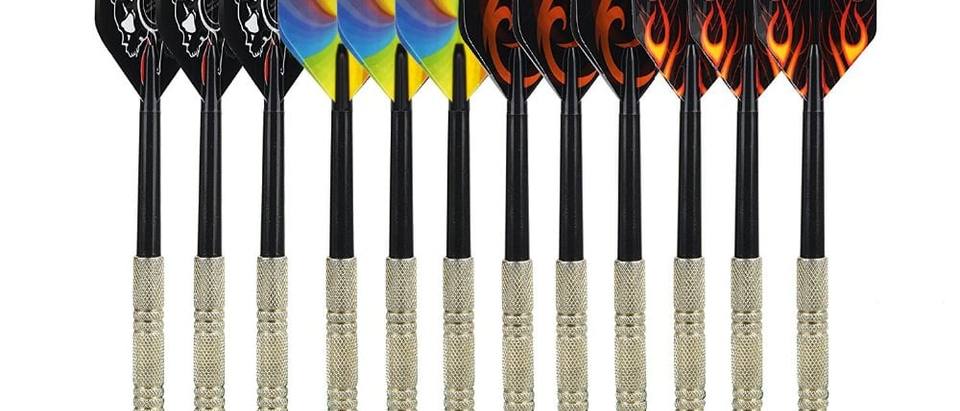
For a game with four players on an electronic board, our set of 12 soft-tip darts gives everyone their own three darts, with 30 spare flights and 100 spare tips. For a bristle board, the 22 g steel-tip darts, set of 6, are enough for two players. See all our darts.
Frequently asked questions
What numbers do you use in cricket darts?
The numbers 15, 16, 17, 18, 19 and 20, plus the bull. Every other number on the board scores nothing in cricket.
How many hits do you need to close a number in cricket?
Three marks. A single counts as one mark, a double as two and a treble as three, so one treble closes a number straight away. On the bull, the outer ring counts as one mark and the bullseye as two.
Do you have to close the numbers in order?
No. In standard cricket you can aim at any of the cricket numbers in any order. Many players start with 20 because it is worth the most points.
How do you win at cricket darts?
Close all six numbers and the bull, with a points score equal to or higher than your opponent's. If you close everything but are behind on points, you keep throwing to score points on numbers your opponent has not closed yet.
What is cut-throat cricket?
A version, usually played by three or more, in which the points you score go to your opponents instead of you. The lowest score wins, so you score on numbers others have left open to push their totals up.