Buying advice
Dart flights and stems: shapes, lengths and how to choose
What dart flights and stems do, flight shapes and thicknesses, stem lengths and materials, and how to choose, fit and replace them to suit your throw.
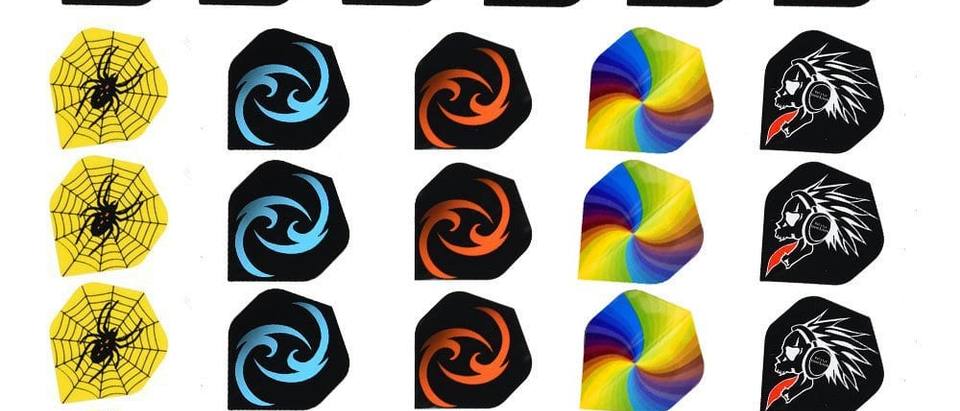
Flights and stems, also called shafts, are the cheap parts at the back of a dart, but they change how it flies more than most new players expect. The flight steadies the dart in the air, and the stem joins the flight to the barrel and decides how far back it sits. For most beginners, standard-shaped flights on a midi or medium stem are the place to start. Change one part at a time from there.
What flights and stems do
The dart maker Harrows puts it simply: the flight stabilises the dart in the air. A larger flight creates more drag, which helps the dart fly in a smooth arc. A slim flight creates less drag and suits a faster throw.
The stem connects the barrel to the flight. As the UK retailer Doubletop Dart Shop explains, its length moves the dart's balance point: a short stem moves it forward, a long one moves it back. Both parts wear out and both are cheap, so experimenting costs very little.
Flight shapes
| Shape | What it does | Often suits |
|---|---|---|
| Standard | largest surface and most drag, steadiest flight, smooth arc | beginners, darts of about 23 g and over, a slower or lobbed throw |
| No. 6 (sometimes sold as "shape") | like standard with slightly slanted sides, a little faster but less stable | a step between standard and the smaller shapes |
| Pear, kite, fantail | smaller, faster through the air, less forgiving of a poor throw | darts of 22 g and under, a harder throw |
| Slim | least drag, needs a hard, straight throw | players who group darts tightly |
Darts Corner, a UK darts retailer, recommends standard flights for darts of around 23 g and over or a weak or lobbed throw, and says they help stop darts dropping low. It suggests the smaller pear, kite and fantail shapes if you throw harder or use darts of 22 g and under. It also notes that, in general, the bigger the flight, the more upright your darts stand in the board.
Smaller flights cover less of the target, so later darts can get closer to the first one. That is why slim flights are popular with players who stack their darts in the treble. The price is a dart that punishes a crooked release.
Thickness and materials
Flight thickness is given in microns (thousandths of a millimetre):
- 75 micron: cheap, light and flexible. Darts Corner notes they tend not to last as long as thicker flights.
- 100 micron: the usual choice for regular players. They last longer, and the extra weight and thickness can make a dart fly flatter.
- 150 micron: very tough, but following darts can deflect off them instead of going into the board.
Materials vary as well. Hard plastic flights let darts slide past each other but cannot be repaired once damaged. Softer plastic bends more easily, but small dents can be pressed out by hand. Nylon flights are among the most durable, some with reinforcing fibres woven in. Moulded flights are thicker still and hold their four wings at 90 degrees.
Stem lengths
There is no common standard for stem lengths. Harrows' beginner guide gives short as about 25 to 34 mm, medium as 38 to 41 mm and long as 45 mm and over, while its own nylon stems are sold as short 35 mm, midi 41 mm and medium 48 mm. Retailers usually give the length without the thread. Compare stems by the millimetres, not the name.
What length does, in Harrows' words:
- Short: the dart flies more steeply and tends to stand upright in the board.
- Medium: flattens the flight path.
- Long: extra stability and a flatter entry into the board, which suits players who stack their darts.
Harrows suggests midi stems as a good starting point for most beginners.
Stem materials
- Nylon and polycarbonate: the cheapest, light and made in lots of colours. They are the stems most likely to snap, especially after a bounce-out onto a hard floor or if screwed in too tightly.
- Aluminium: strong and slim, but can bend if hit hard, and metal stems in metal barrels tend to work loose.
- Carbon fibre: very light and durable, and dearer.
- Titanium: strong and light, but expensive.
Spinning stems
On a spinning stem, the top section that holds the flight turns freely. The idea is that when an incoming dart clips the flight of a dart already in the board, the top spins out of the way instead of knocking the new dart off line. Doubletop notes that results vary from player to player. Spinning stems mainly matter once your darts land close together, because that is when they start hitting each other.
One-piece and moulded systems
Some systems combine the flight and stem in one moulded unit, or use a flight that clips firmly into a matching stem. The flights are thicker than folded ones, keep a 90-degree angle and do not separate from the stem in play. The downsides: Darts Corner notes they may cause more deflections for some players, they often cost more and some add a little weight at the back. Several systems only work with their own stems and flights, so check what fits before you buy spares.
Matching flights and stems to your darts and throw
- Start standard. Standard flights on a midi or medium stem suit most new players.
- Think about weight. Heavier darts tend to pair with larger flights and lighter darts with smaller ones. Our guide to dart weights explains the usual range.
- Darts dropping low? Try a larger flight. Check your throw too: a dropping elbow or a short follow-through often causes the same thing. See how to throw darts.
- Change one thing at a time, and give it a few sessions before you judge it.
Fitting them and stopping them coming loose
- Screw the stem in by hand until it is snug. Do not force it with pliers: the darts retailer A-Z Darts warns that overtightened stems are more likely to snap at the barrel.
- Fit an O-ring. A small rubber ring over the thread, between stem and barrel, acts as a seal and helps stop metal stems working loose. You can unscrew and refit the stem without replacing it.
- Push the flight fully into the slots, so all four wings sit square.
- Use flight rings or springs. A ring or spring over the top of the stem holds the flight in place.
- Flights keep falling out? Doubletop says this is usually down to worn stems or loose-fitting flights, so try a new stem or a better-fitting flight.
When to replace them
Replace a flight when it is torn, split or bent so it no longer holds its shape, or when it sits loose in the stem. Replace a stem when it is cracked, bent or worn at the top. Change all three darts at once so the set stays matched, and keep spares in your case.
Steel tip and soft tip: same parts?
Mostly, yes. Doubletop explains that most modern stems have a standard 2BA thread, so they fit most steel-tip and soft-tip darts. It is not universal, because some barrels use another thread or their own fitting. On soft-tip darts, the stated weight often refers to the whole dart, so a heavier stem adds to it. Check your board's weight limit before you swap to metal stems.
What comes with our darts
- Our 22 g steel-tip darts, set of 6, have aluminium stems of 48 mm without the thread, at the long end of the usual range, with printed flame flights in the supplier photo. The supplier does not list spare parts.
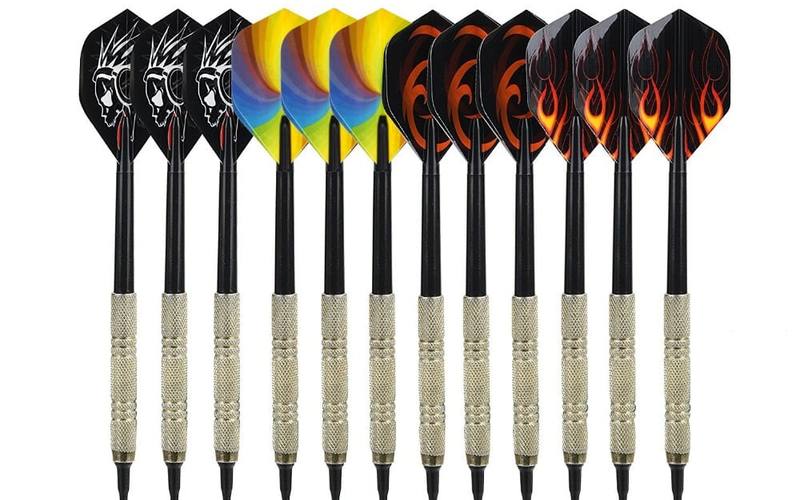
- The set of 12 soft-tip darts come assembled, with stems fitted and printed flights in assorted designs, plus 30 spare flights and 100 spare tips. No spare stems are listed.
- The set of 3 soft-tip darts with a hard case have purple aluminium stems and purple patterned PVC flights. The supplier does not list spare parts.
These are budget sets, so treat the flights and stems they come with as a starting point. Once you know what your throw likes, change them to suit. See all our darts.
Frequently asked questions
What are the best dart flights for a beginner?
Standard-shaped flights. They have the largest surface, so they steady the dart and forgive an uneven throw. Harrows advises beginners to stick with standard flights until their throwing style settles. A 100 micron flight lasts longer than a thin 75 micron one.
What length dart stem should I use?
Start in the middle of the range, a midi or medium stem of roughly 40 to 48 mm, and adjust from there. A shorter stem moves the balance point forward and tends to give a steeper flight. A longer stem moves it back and gives more stability. Makers label lengths differently, so compare the millimetres, not the names.
Why do my dart stems keep coming loose?
Metal stems in metal barrels tend to work loose with the vibration of each throw. Fit a small rubber O-ring over the thread, between the stem and the barrel, and screw the stem in by hand until it is snug. Do not force it tighter: overtightened stems are more likely to snap at the barrel.
Do steel-tip and soft-tip darts use the same stems?
Usually, yes. Most modern stems have a standard 2BA thread and fit most steel-tip and soft-tip barrels. A few barrels use a different thread or their own fitting system, so check before you buy a large pack.
When should I replace dart flights?
When they are torn, split or bent out of shape, or no longer sit firmly in the stem. Hard plastic flights cannot be repaired once damaged. Small dents in softer flights can often be pressed out by hand. Replace a full set of three so your darts stay matched.